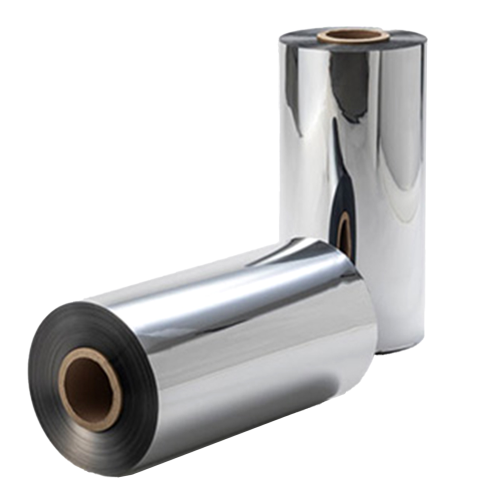
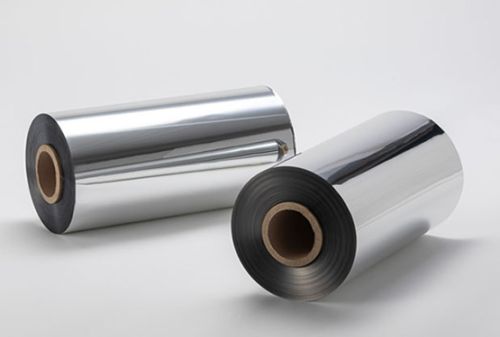
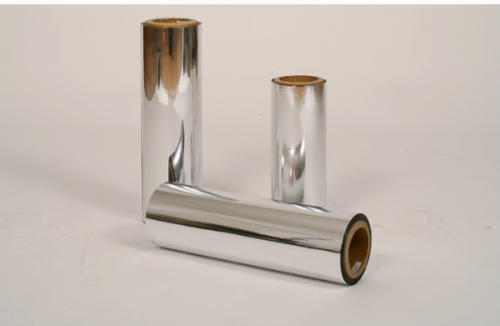
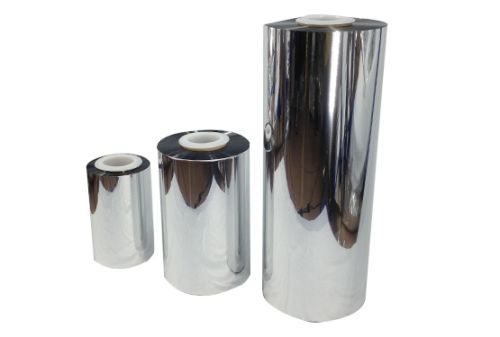
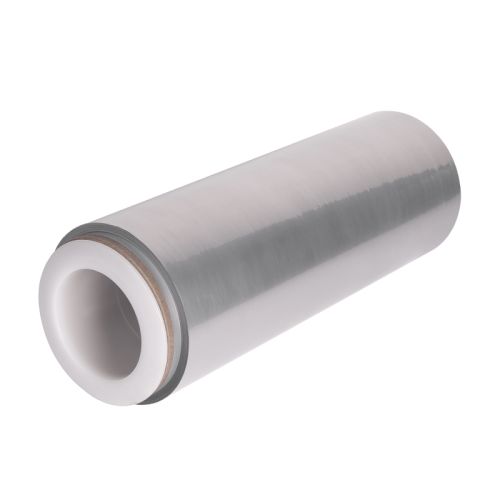
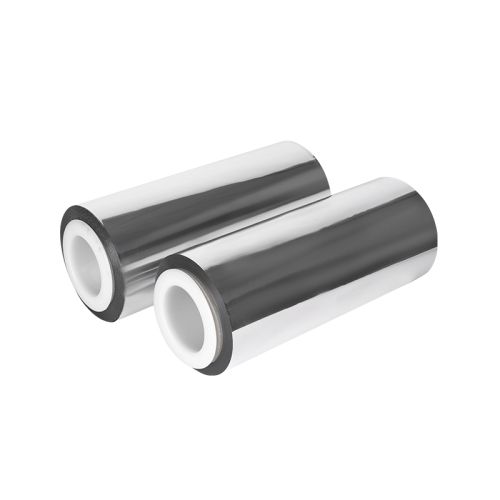
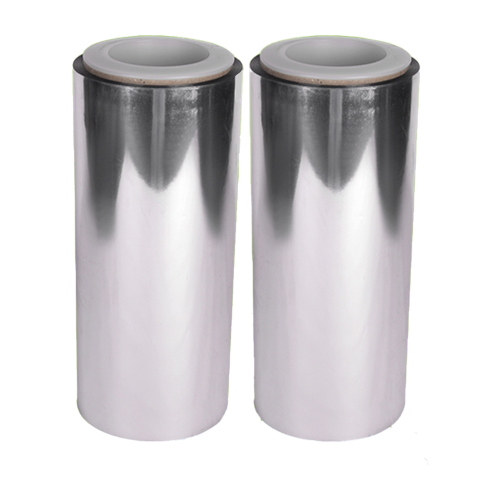
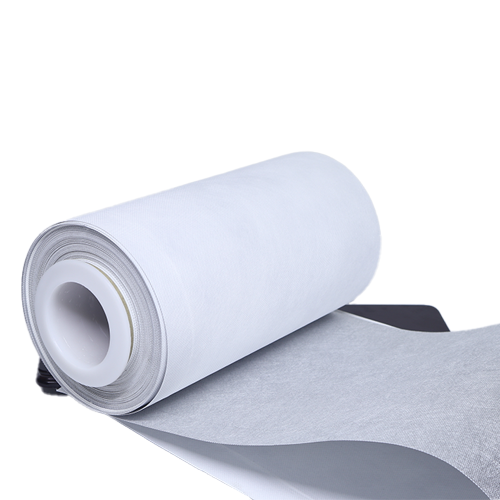
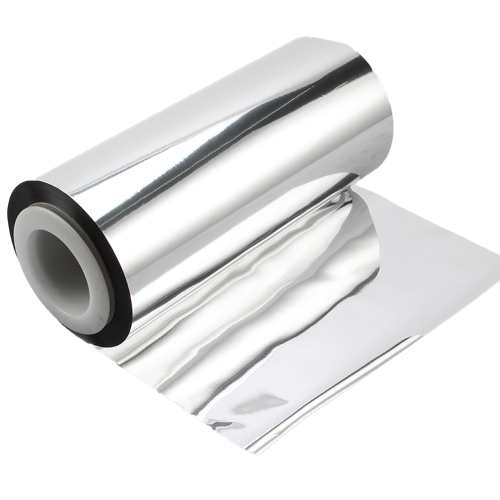
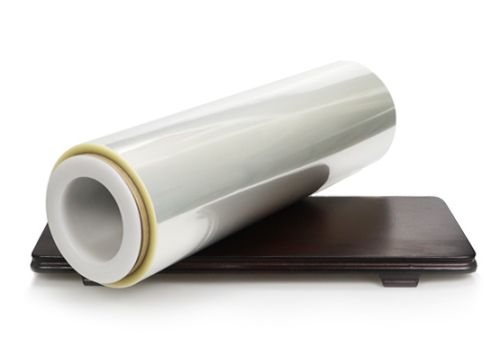
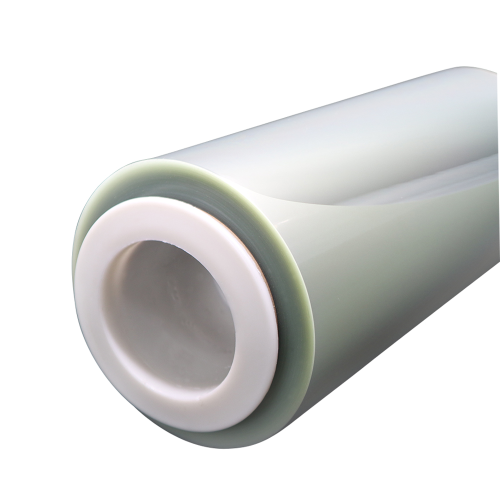
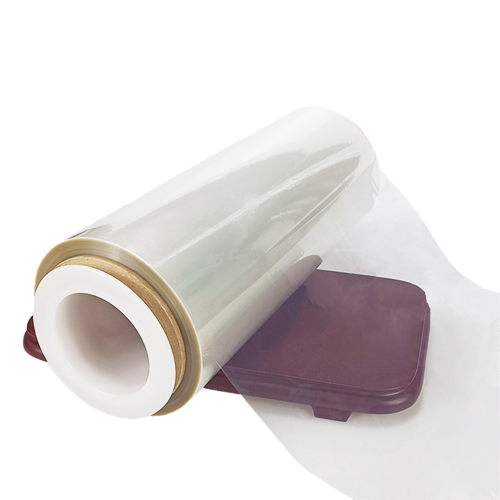
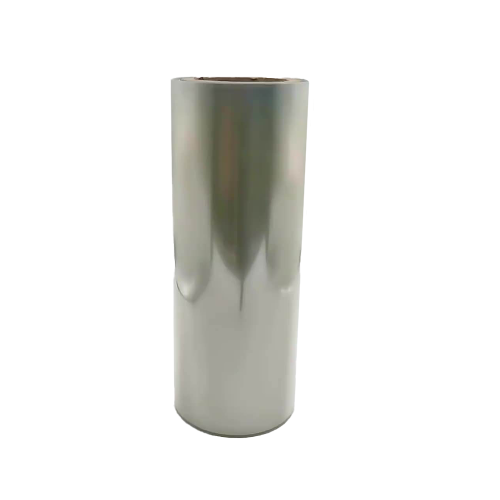
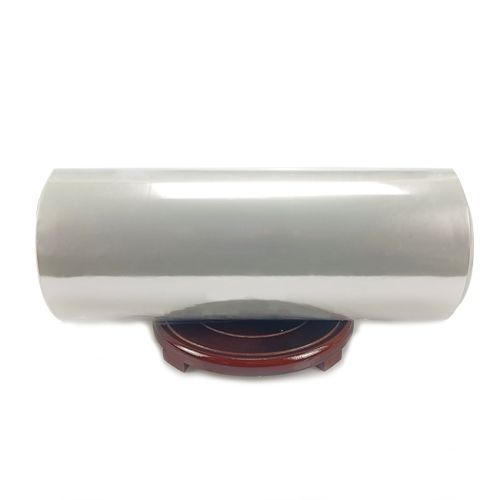
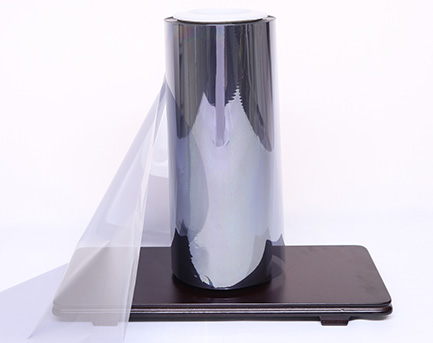
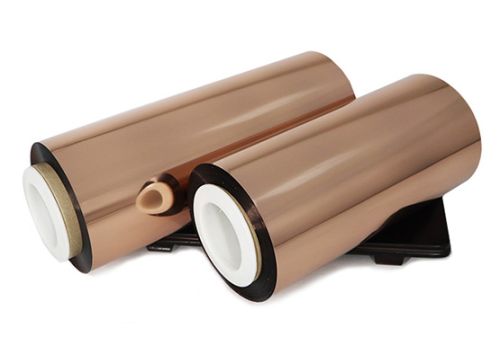
A mono-PE laminate may pass incoming film inspection and still miss its oxygen or moisture target after printing, lamination, slitting, and pouch making. MDOPE barrier loss after lamination is not automatically a coating defect. The finished result can be affected by web tension, roller contact, adhesive chemistry, cure, winding pressure, flexing, gussets, and seal geometry. Water-Based Coated MDOPE Film gives converters a PE-based printing and barrier web, but the complete structure needs controlled conversion and package-level testing.
Why Barrier Changes During Conversion
A barrier coating is thin compared with the polymer substrate. Excessive stretching, hard folds, wrinkles, abrasive rollers, or particles can create microscopic damage. The effect may be small on a flat sample but larger after a web is converted into a gusseted pouch.
The adhesive system can also change the result. Poor wetting may leave local voids, while an aggressive formulation or excessive solvent retention can affect the coated interface. Cure temperature, roll hardness, and winding pressure can add stress before the bond has developed. Seals and zipper areas may then dominate package ingress even if the flat laminate remains acceptable.
Separate Film Barrier From Package Leakage
Begin by testing the incoming roll, the printed web, the cured laminate, the slit roll, and the finished pouch. Use comparable sample orientation and test conditions. If the flat laminate passes but the pouch fails, investigate seals, closures, folds, and mechanical damage before changing the film grade.
A leak test and permeation test answer different questions. A pouch can show rapid oxygen ingress through a channel leak even when the laminate has strong barrier. Conversely, a leak-free pouch can still miss shelf life because the web transmission rate is too high for the package area and storage climate.
A Step-by-Step Diagnostic Plan
- Preserve samples from the incoming roll, printed web, cured laminate, slit roll, and finished pouch.
- Map failures by roll, web lane, machine direction, operator, adhesive batch, and production time.
- Check whether the coated side and printing or laminating orientation were correct.
- Review tension, nip pressure, roller condition, oven settings, residual solvent, coat weight, and cure.
- Inspect folds, gussets, zipper transitions, seal edges, and sharp package corners.
- Repeat OTR and WVTR under the same conditions, then confirm the correction on more than one lot.
How Water-Based Coated MDOPE Fits Mono-PE Packaging
Cailong positions Water-Based Coated MDOPE Film as a coated oriented PE web for PE-focused packaging, with barrier, stiffness, and printability as intended functions. It can be evaluated with a compatible PE sealant to reduce the use of unrelated polymer families. This is a material-design direction, not an automatic recyclability claim.
The coating, inks, adhesive, sealant, closure, and local recycling guidance remain part of the assessment. Buyers should request grade-specific information rather than transferring a property from one MDOPE construction to another.
Processing Controls
Use stable, minimum-effective tension and clean, smooth web paths. Avoid repeated contact on the coated surface. Confirm surface orientation before the run and record winding direction. Keep the adhesive ratio, viscosity, coat weight, drying, nip, and cure within the qualified window.
Do not judge bond or barrier immediately off the laminator. Allow the specified cure, then test after representative flexing and pouch conversion. Store rolls under the supplier’s recommended conditions and protect them from moisture, dust, heat, and mechanical damage.
Material Alternatives
Metallized PE or BOPE films may provide light barrier and a different mechanical balance. EVOH-containing coextrusions provide another oxygen-barrier route but their behavior depends on layer design and humidity. PET-based barrier webs can offer stiffness and dimensional stability but move the structure away from a PE-focused design. Select the route that meets the package target with acceptable converting risk.
FAQ
Does lower barrier after lamination prove coating damage?
No. Test the web at multiple stages and check leakage, seals, flexing, adhesive cure, and sample conditions before assigning the cause.
Can increasing adhesive coat weight restore barrier?
Not reliably. More adhesive may change stress and cure but cannot repair severe coating cracks or leaking seals. Use controlled trials.
Is mono-PE packaging automatically recyclable?
No. The complete construction and the applicable collection and recycling rules must be evaluated.
Conclusion
Pilot-Run Acceptance Criteria
Before the trial, agree on acceptable appearance, print adhesion, laminate bond, seal window, pouch leakage, and barrier after conversion. Use the same conditioning and test methods for baseline and trial samples. Record sample location across the web because a single center-lane specimen can miss edge-related tension or coating damage.
Keep retained samples from the film roll, laminate, and pouches. Link them to machine settings and test results. If a correction works, repeat it with another production lot before changing the commercial specification. This converts troubleshooting into a reproducible approval process rather than a one-time machine adjustment.
MDOPE barrier loss after lamination should be investigated as a system problem. Compare barrier at each converting stage, protect the coated surface, control adhesive cure, and test the finished pouch. Review the verified Water-Based Coated MDOPE Film range, then qualify the selected grade in the actual mono-PE structure.
Related resource: MDOPE conversion guide